
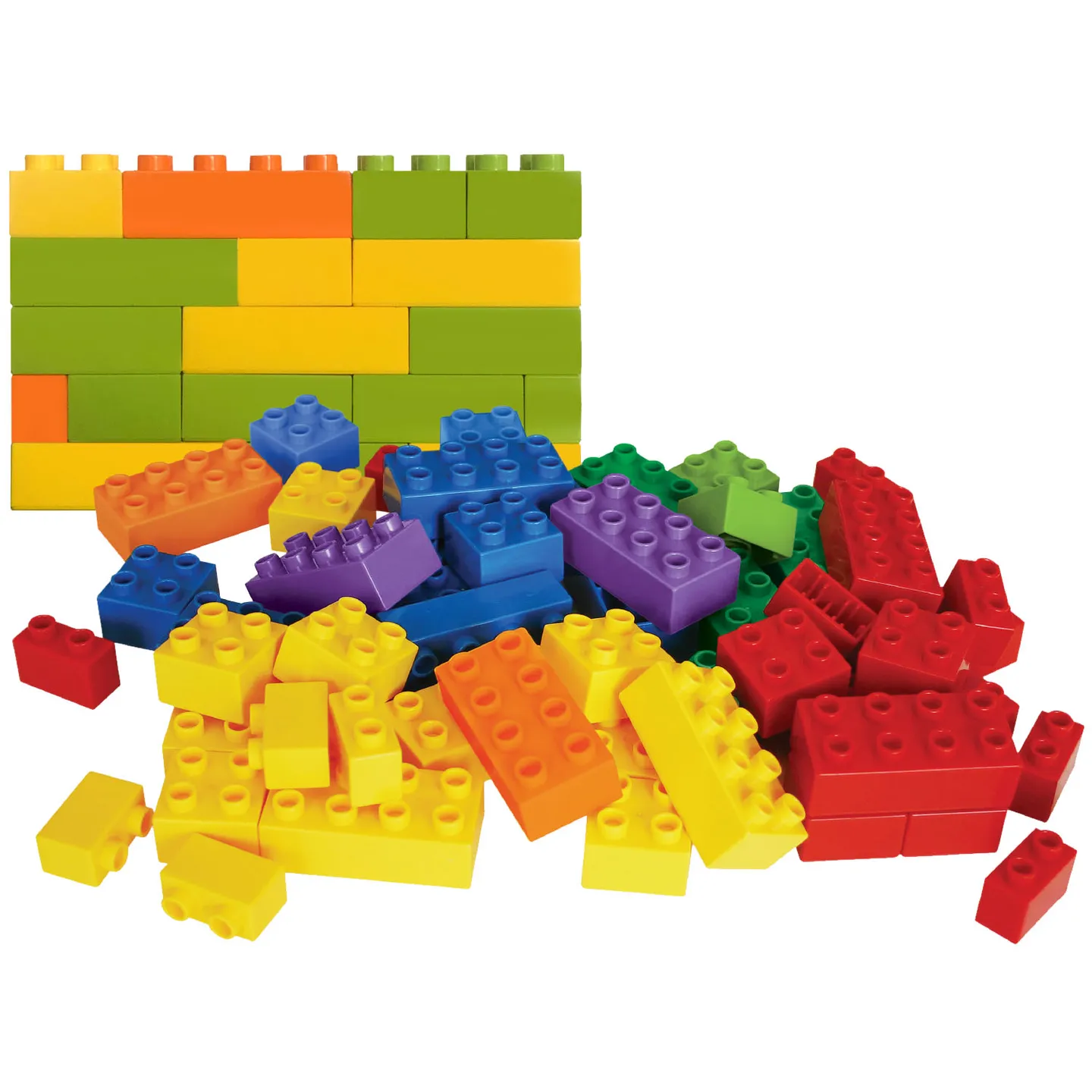
Giant Building Blocks are an excellent way to transform ordinary rooms into engaging environments where children can create, explore, and imagine. Giant Building Blocks provide children with large, easy-to-handle pieces that can become castles, towers, houses, bridges, and pretend-play settings. With Giant Building Blocks, families, schools, and childcare centers can design flexible play areas that encourage creativity, movement, teamwork, and hands-on learning. A thoughtfully planned construction space can give children the freedom to build their own ideas while developing valuable skills through active play.
Designing a Creative Play Space
A creative play space should give children enough freedom to explore while providing an organized and comfortable environment. Unlike spaces designed around one specific toy or activity, an adaptable construction area can change according to children's interests.
Large construction pieces can become the central feature of such a space. Children can use them independently or collaborate with friends and family members to create structures of different sizes and shapes.
Choosing the Right Location
The first step is selecting an area with sufficient open floor space. A playroom, classroom, daycare activity area, or multipurpose room can work well when furniture is arranged to provide clear building zones.
The floor should be stable and comfortable for children to sit, kneel, walk, and build. A suitable play mat or carpet can make longer construction sessions more comfortable.
How Giant Building Blocks Encourage Creativity
Giant Building Blocks support open-ended play because children are not limited to one finished design. The same pieces can be transformed into different creations each time they are used.
A child might build a tall tower in the morning and turn those same pieces into a pretend fire station later. This flexibility helps maintain interest and encourages children to experiment with new ideas. For more information about large building blocks for kids, explore their features, benefits, age suitability, and role in encouraging imaginative and educational play.
Open-Ended Construction
Open-ended play gives children control over the creative process. They can decide what to build, which pieces to use, and how to modify their designs.
If a structure does not work, children can take it apart and try another approach. This process encourages persistence and teaches children that experimentation is an important part of creativity.
Encouraging Imaginative Play
Construction pieces can become much more than physical structures. A group of blocks can represent a castle, spaceship, zoo, restaurant, or imaginary city.
Once children create their environment, they can develop stories around it. This combination of building and pretend play can encourage language development, storytelling, and creative thinking.
Building Different Types of Play Environments
A creative play space can support many different themes. Rotating construction activities allows children to experience new challenges without requiring completely new toys.
Castle and Fantasy Areas
Children can use large blocks to create castle walls, towers, gates, and rooms. Once the structure is complete, it can become the setting for fantasy adventures.
Adding toy figures, stuffed animals, or costumes can extend the activity and encourage children to create their own stories.
Miniature Cities
Children can design an imaginary community with buildings, roads, bridges, shops, and transportation areas.
Giant Building Blocks can make these structures large enough for children to interact with directly. Toy vehicles and figures can be incorporated into the city to create additional opportunities for role-playing.
Adventure and Exploration Zones
Construction pieces can also create tunnels, pathways, shelters, and observation towers. Children can use these structures to create pretend exploration games.
An adventure zone encourages movement while allowing children to design the environment themselves.
Developmental Benefits of Construction Play
A well-designed creative play space can support children's development in several areas. Hands-on construction encourages physical coordination while also requiring planning and decision-making.
Fine Motor Coordination
Although the pieces are oversized, children still need to grasp, carry, position, and stack them carefully. These movements provide opportunities to practice hand-eye coordination.
Repeated construction activities can help children become more confident when manipulating objects and organizing materials.
Spatial Awareness
Building structures introduces children to concepts such as height, width, distance, balance, and position.
They can observe how changing the location of one piece affects the overall structure. These experiences provide practical opportunities to explore basic geometry and spatial relationships.
Problem-Solving Skills
Construction rarely goes perfectly on the first attempt. A tower may lean, a bridge may collapse, or a wall may need additional support.
Giant Building Blocks allow children to experiment with solutions. They can rebuild, adjust, and test different designs until they find an arrangement that works.
Creating Collaborative Play Opportunities
Creative spaces can encourage children to build together. Group construction projects provide opportunities for communication, teamwork, sharing, and negotiation.
Team Building
Children can divide responsibilities during a large project. One child might construct a foundation while another works on a tower or entrance.
This approach encourages children to understand that successful projects can involve multiple contributions.
Family Construction Sessions
Parents can also participate in creative building. Instead of directing every step, adults can encourage children to lead the project.
Questions such as “What should we build next?” or “How can we make this stronger?” can stimulate conversation and help children think through their ideas.
Adding Educational Activities
A creative play space can combine construction with early educational concepts. Parents and educators can introduce simple challenges involving numbers, shapes, colors, and measurements.
Early Mathematics
Children can count construction pieces, compare the height of two structures, identify shapes, or create repeating patterns.
These activities can introduce mathematical concepts through practical experiences rather than worksheets.
STEM and Engineering Exploration
Giant Building Blocks can also support early STEM learning. Children can explore balance, symmetry, stability, weight distribution, and basic structural design.
Adults can ask children why a structure stands or falls and encourage them to test different solutions. This turns construction into an informal engineering experiment.
Organizing a Building Area
An organized play space makes it easier for children to access materials and clean up afterward. Storage bins, open shelving, or designated containers can help keep large pieces together.
Creating Building Zones
A room can be divided into different areas for different activities. One section can be used for construction, another for storytelling, and another for displaying finished creations.
Giant Building Blocks can move between these zones as children's projects develop. This flexibility makes the play space adaptable.
Displaying Children's Creations
Displaying completed structures can give children a sense of achievement. A small display area can allow children to explain what they built and how they created it.
Photographs can also be used to document temporary structures that need to be dismantled for the next activity.
Safety in Creative Play Spaces
Safety should be considered when designing any construction area. The space should provide enough room for children to move around structures without unnecessary obstacles.
Parents and educators should choose age-appropriate products and inspect pieces regularly for cracks, damage, or sharp edges.
Safe Building Practices
Children should be taught to carry large pieces carefully and avoid throwing them. They should also understand that unstable structures should not be climbed unless specifically designed for that purpose.
Adult supervision may be especially important for younger children or larger group activities.
Choosing the Right Giant Building Blocks
When selecting Giant Building Blocks, consider the children's ages, available space, material, durability, piece size, and number of pieces.
Lightweight pieces may be easier for younger children to handle, while durable materials can be useful in classrooms and childcare environments.
Storage and Maintenance
Because oversized construction pieces require more storage space, consider where they will be kept when not in use. Easy-access storage can encourage children to participate in cleanup.
Regular cleaning and inspection can also help maintain the condition of frequently used construction toys.
Keeping Creative Play Fresh
The best creative play spaces evolve over time. Parents and educators can introduce new challenges, themes, and building goals to keep children interested.
Giant Building Blocks can be used for castle-building one day and city planning the next. Another session could focus on bridges, animal habitats, transportation centers, or imaginary space stations.
This variety allows children to continually discover new uses for the same construction materials.
Frequently Asked Questions
1. What are Giant Building Blocks used for?
Giant Building Blocks can be used to construct towers, castles, houses, bridges, tunnels, cities, forts, vehicles, and imaginative play environments.
2. How do Giant Building Blocks support creative play?
They provide open-ended construction opportunities that allow children to design, modify, dismantle, and rebuild structures according to their own ideas.
3. Are Giant Building Blocks suitable for classrooms?
Yes. They can be useful in classrooms, daycare centers, and other educational environments when the pieces are age-appropriate and sufficient floor space is available.
4. What skills can children develop through construction?
Construction play can encourage creativity, coordination, spatial awareness, problem-solving, planning, communication, teamwork, and early STEM understanding.
5. How can parents create a better building area?
Choose a clear and comfortable space, organize the pieces in accessible storage, establish simple safety rules, and introduce different construction themes to encourage continued exploration.
Conclusion
Giant Building Blocks can transform a basic room into a flexible creative play space where children are free to imagine, construct, experiment, and collaborate. From fantasy castles and imaginary cities to bridges, tunnels, and adventure zones, oversized construction pieces can support countless forms of play. They also encourage valuable developmental skills, including coordination, spatial reasoning, communication, planning, and problem-solving. By creating a safe building area, providing organized storage, and introducing fresh challenges, parents and educators can build an environment where children remain curious and engaged. A creative construction space is not simply an area filled with toys; it is an environment where children can turn ideas into physical creations and learn through play.